How to Move, Lift, and Pack Heavy Furniture Without Hurting Yourself

Most moving day injuries aren’t down to bad luck but a moment of impatience: lifting before you’re ready, rushing through a doorway, or trying to make a two-person job a one-person one. Heavy furniture doesn’t have to be dangerous, but it does demand a bit of respect. Know what you’re doing before you start, and you’re far less likely to injure yourself.
Plan and prepare your route first
Measuring doorways before you try to wrestle a wardrobe through them sounds obvious, but it’s the kind of thing that goes out the window when moving day arrives and the adrenaline kicks in. Take five minutes before you start to walk the route each heavy piece will take: through which door, around which corner, down which set of stairs.
If something won’t fit upright, work out whether it can go on its side before you get it halfway down the hallway. Remove drawers, shelves, and anything else that adds weight or shifts the balance. The lighter and more manageable you can make a piece before it’s off the ground, the better. And don’t forget to clear your path. Boxes left in a corridor and slippery rugs are hazards, especially if both your hands are full and you can’t see your feet.
How to lift without hurting yourself
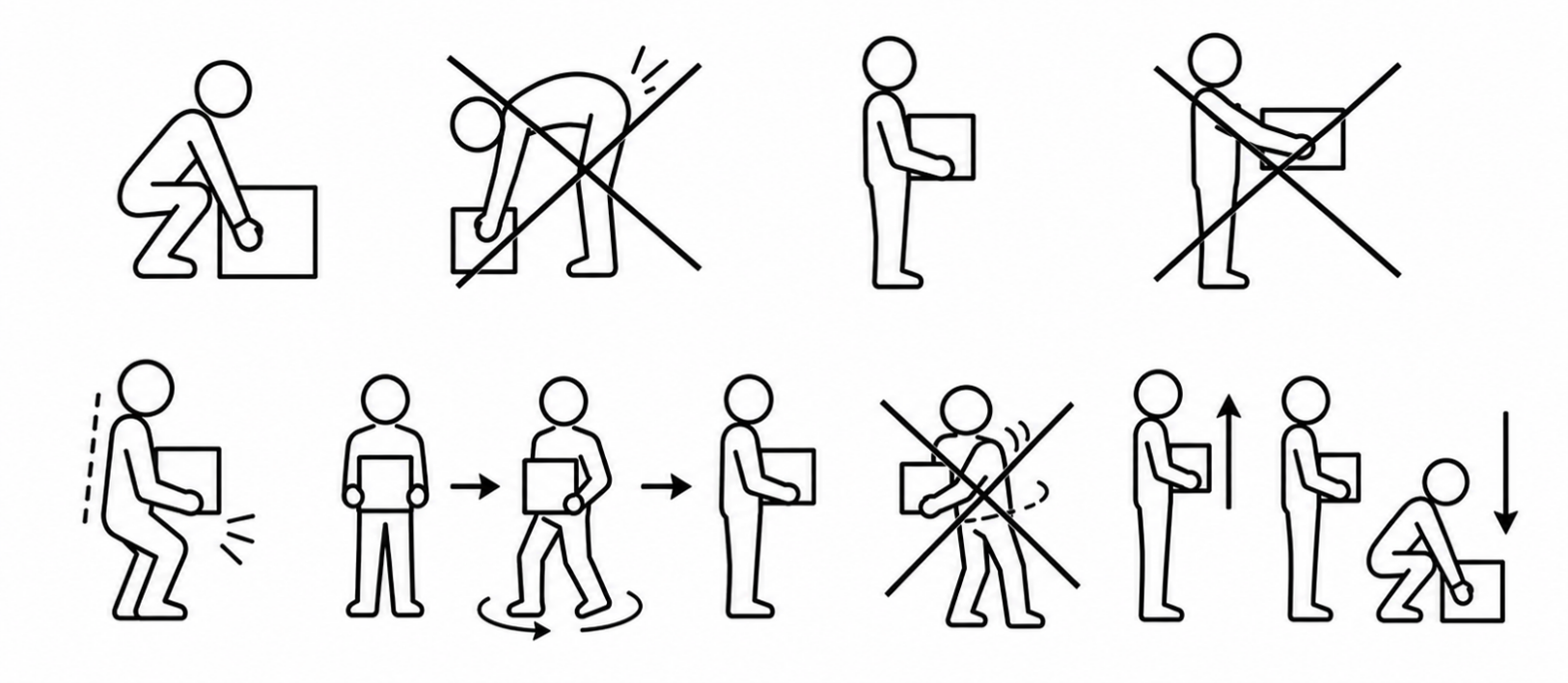
Back injuries are by far one of the most common moving day problems and they’re almost always avoidable. The British Chiropractic Association’s guidance has a few recommendations when it comes to lifting safely:
- Bend at the knees, not the waist, to put the weight onto your legs, rather than your lower back. They can take weight much better (after all, they’re keeping the rest of you upright 24/7).
- Keep the load close to your body. The further out you hold something, the more strain it puts on your spine, the less grip you have on it, and the more it can throw off your balance.
- Keep your back straight and your core engaged throughout the lift. To engage your core, tighten your stomach area, like you would when you cough.
- Never twist at the waist while carrying something heavy. If you need to turn, move your feet instead.
- Lift and lower slowly and with control. Never rush.
If something feels too heavy to handle, don’t risk it. Put it down and get another pair of hands.
If you have chronic pain, a disability, or a physical limitation
The standard advice around bending your knees and keeping your core engaged assumes a body that can do both without issue, but that isn’t the reality for some people. If you have a chronic condition, joint problems, a bad back, or limited mobility, moving heavy furniture can cause a setback that outlasts the move by weeks.
Be honest with yourself about what you can and can’t do safely; there’s no shame in sitting out the heavy lifting entirely and directing from the doorway instead. If you’re moving with others, let them know about your limitations before the day so nobody ends up in an awkward position mid-carry, or judges you if you stand out.
Above all, don’t try and go at it alone. Some friends, or a removals team who knows what they’re doing, will get everything moved without you having to put your body on the line.
How do you carry heavy loads and furniture?
Different pieces need different approaches, and getting it wrong or not adapting your approach to the item is when things often go sideways.
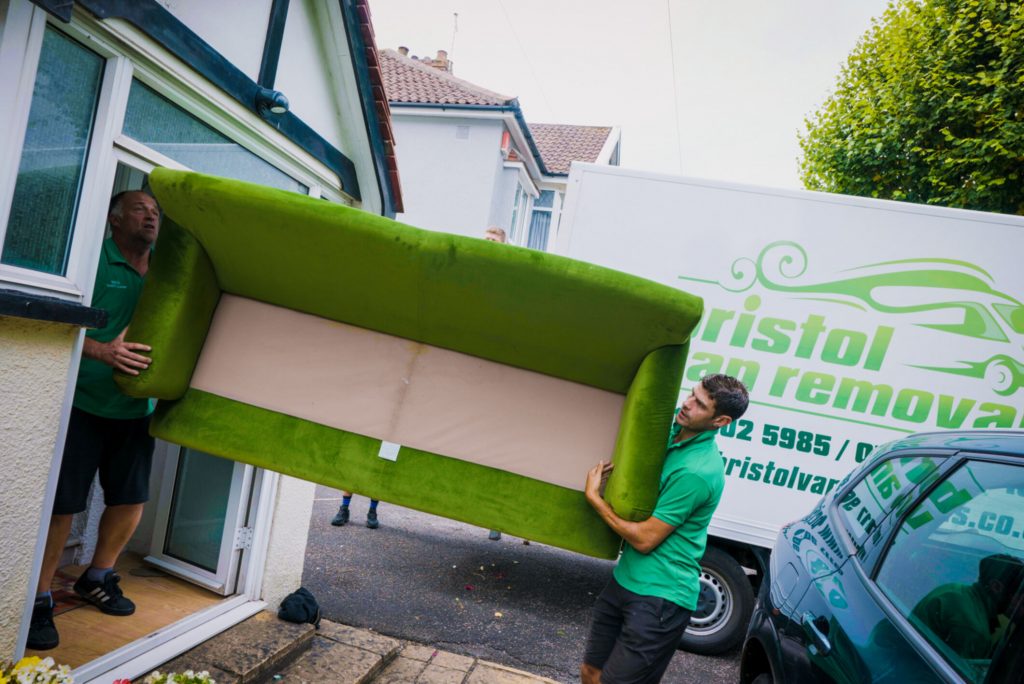
- Sofas: Can almost always be stood on one end to get through doorways. If that still doesn’t work, many have easily unscrewable legs. Have one person guide from the front, and one from the back, and communicate clearly about every turn.
- Wardrobes: Should be emptied completely before you attempt to move them. If it’s too tall to go through a doorway upright, it may need to come apart. Thankfully, many flat-pack wardrobes are built to be disassembled.
- Fridges and freezers: Make sure they are fully defrosted and, of course, empty. They should always be transported upright, as lying them flat can damage the compressor. Once you’re at your new home, let the fridge stand for a couple of hours before switching it back on.
- Bed frames: More awkward than heavy. Take them apart where you can, label or bag the fixings immediately so they don’t vanish into a box, and carry the panels flat, not upright, so they don’t flex and crack.
What if a piece of furniture won’t fit through narrower spaces?
First, strip the piece back as far as it’ll go: legs off, doors off their hinges, drawers out. Then try again.
Then consider the angle. Furniture movers use a technique called the hook and pivot, where you rotate a piece through a doorway in a slow arc rather than trying to push it straight through. It takes patience and a bit of coordination, but it works for sofas and larger chairs more often than not.
If you’ve exhausted those options and the piece still won’t budge, it may need to leave through a window, or unfortunately, not at all.
When to hand it over
Some things need more than two people and a bit of caution. They need a team, proper equipment, and the kind of experience that comes from doing it every day. If you’ve got a piano, a large American fridge, a solid oak dining table, or anything else that gives you pause, listen to that hesitation; it’s there to keep you safe.
Our removals team handles over 70,000 tonnes a year, so we know how to handle heavy and awkward items safely and efficiently. If you’d like a free quote, get in touch and our friendly team will take it from there.
The right tools make a big difference
You don’t need a lot of equipment, but a few things will make moving heavy items much easier and safer.
Furniture sliders (found easily online for under a tenner) are one of the most underrated bits of kit going. Placed under the legs or corners of heavy pieces, they let you glide furniture across hard floors rather than lifting and carrying the full weight. On a carpet, you’ll want sliders made for softer surfaces, so check before you buy.
Moving blankets protect both the furniture, and your walls and door frames. Wrap them around corners and edges that are likely to catch, and they’ll absorb the knocks that would otherwise leave a mark.
Good gloves will give you a solid grip and protect your hands, which take a real beating on moving day.
Packing and protecting furniture for the move
Heavy items don’t just need careful handling in the home; they need protection in the van too. Unsecured furniture moves in transit, and can cause real damage to your belongings if it falls in the wrong direction.
Wrap corners and surfaces that could catch or scratch with moving blankets or bubble wrap before loading. Use straps to secure heavy pieces against the van wall so they can’t move, and stack strategically: heavy items go low and against the cab end of the van, whilst lighter and more fragile things should go on top, or towards the back.
If you have a van removals team helping you, they will take care of all of this, Most reputable companies have goods in transit and public liability insurance.
Get it done without the drama
Moving is a stressful endeavour, we won’t pretend otherwise, but carrying furniture is one thing you just can’t rush. Slow down, communicate clearly with the other movers, and don’t try to be heroes about it. Most injuries and damage happen in a moment of trying to take on too much in eagerness to get the job done. If you’re unlucky, you’ll suffer the consequences of that poor decision for life, so safety truly is paramount here.
If you’d rather hand the heavy work over to someone who does it for a living, we’re here, and can handle any or all aspects of your move, from packing and moving to cleaning. With nearly 20 years in the business and over a thousand happy customers a year, we know how to get even the trickiest pieces from A to B with minimal faff, so give us a ring on 01179025985 or drop us an email at [email protected] for a free and fair quote.